
01
Your battery has spare time
Your battery has spare time
Your battery has spare time
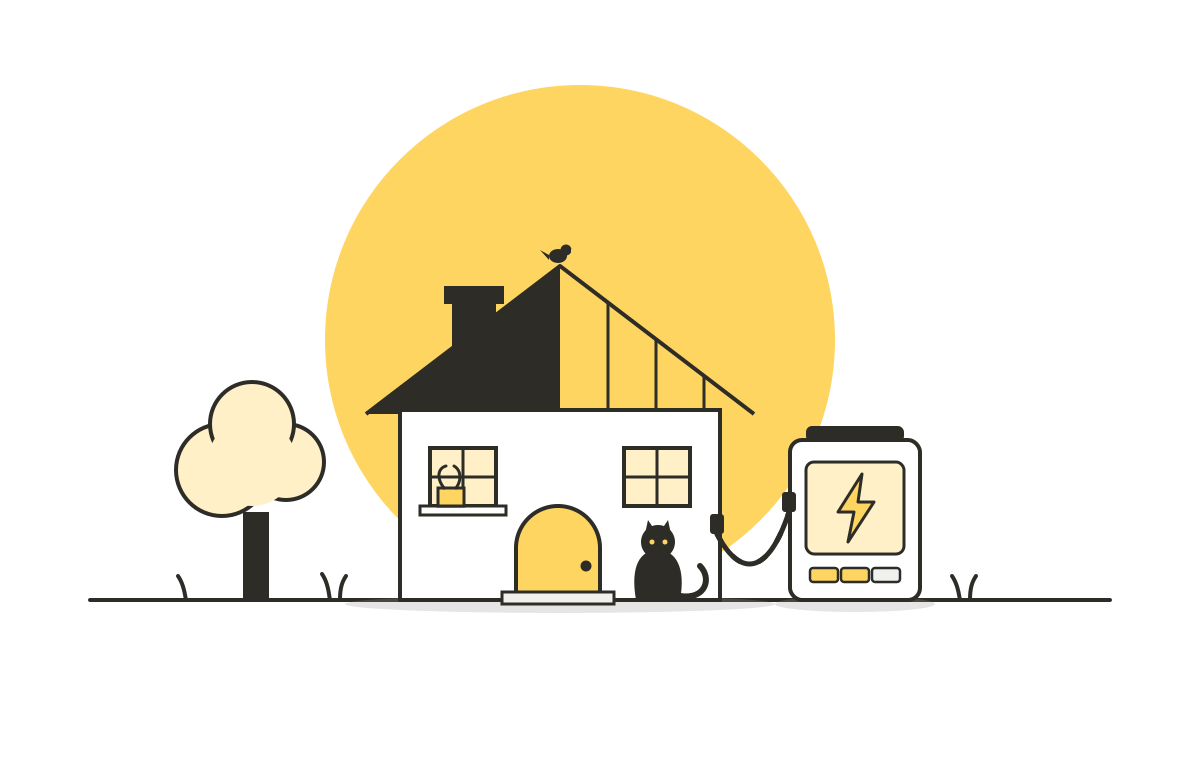
Most days, your battery follows a simple rhythm. It charges when energy is cheap or the sun is out, and powers your home when you need it.
Most days, your battery follows a simple rhythm. It charges when energy is cheap or the sun is out, and powers your home when you need it.
But between those moments, part of it simply waits.
But between those moments, part of it simply waits.


02
The grid doesn’t have spare time
The grid doesn’t have spare time
The grid doesn’t have spare time
A few times a month, the electricity grid hits a tight moment. Demand spikes on a cold evening, or wind and solar generation drop suddenly.
A few times a month, the electricity grid hits a tight moment. Demand spikes on a cold evening, or wind and solar generation drop suddenly.
Keeping power supply running in those moments is difficult, and the grid needs your help.
Keeping power supply running in those moments is difficult, and the grid needs your help.
03
NODI listens to the grid, for you
NODI listens to the grid, for you
NODI listens to the grid, for you
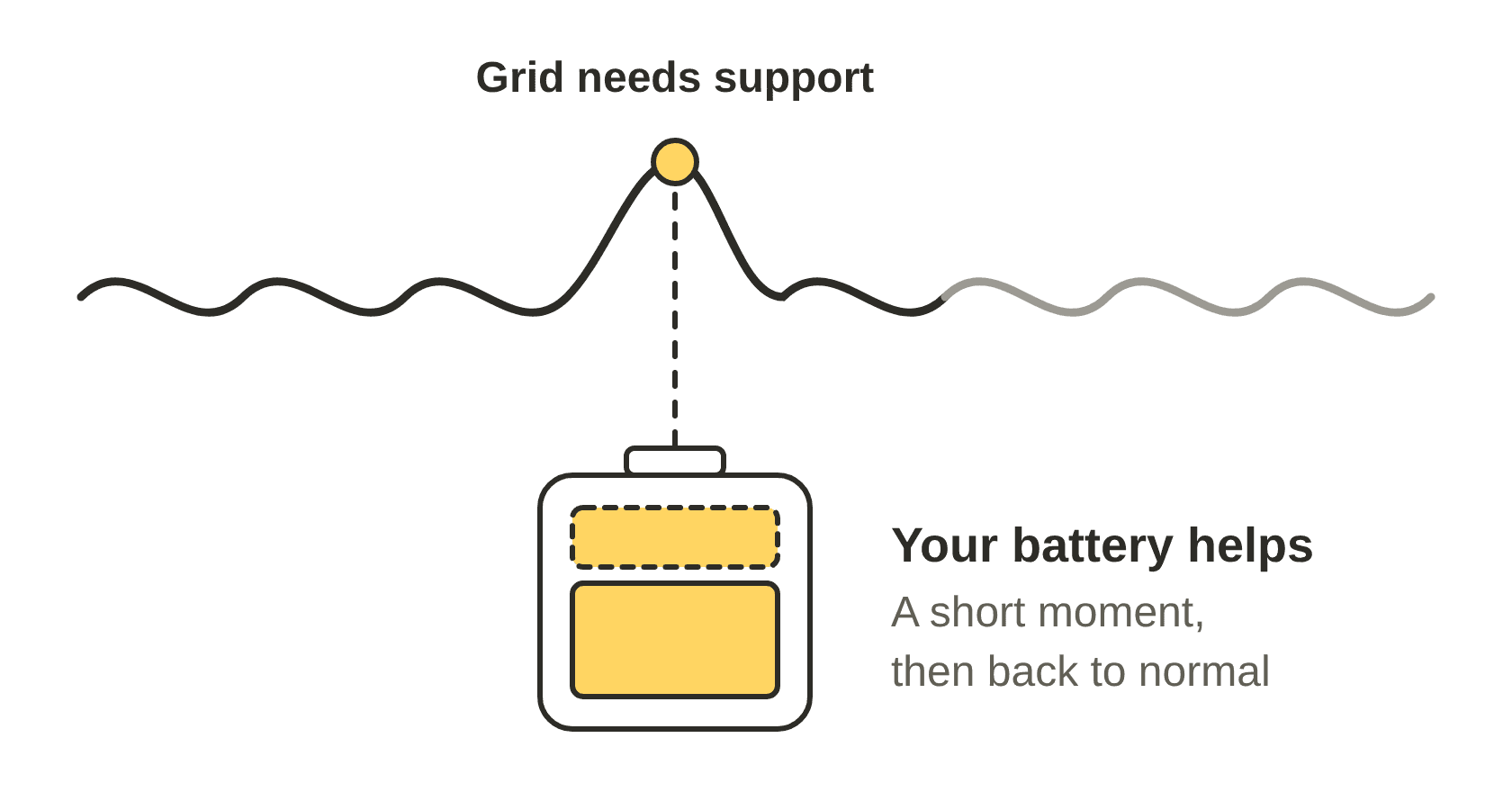
NODI watches the grid around the clock, a bit like a conductor listening to an orchestra, and knows the moment it needs extra support.
NODI watches the grid around the clock, a bit like a conductor listening to an orchestra, and knows the moment it needs extra support.
When it does, we call your battery’s spare capacity for help and the grid pays you in exchange.
Then, your battery goes straight back to its usual rhythm.
You don’t notice it, and
you don’t need to do anything.
You just get paid £120 minimum, in the first year.
You don’t notice it, and
you don’t need to do anything.
You just get paid £120 minimum, in the first year.
